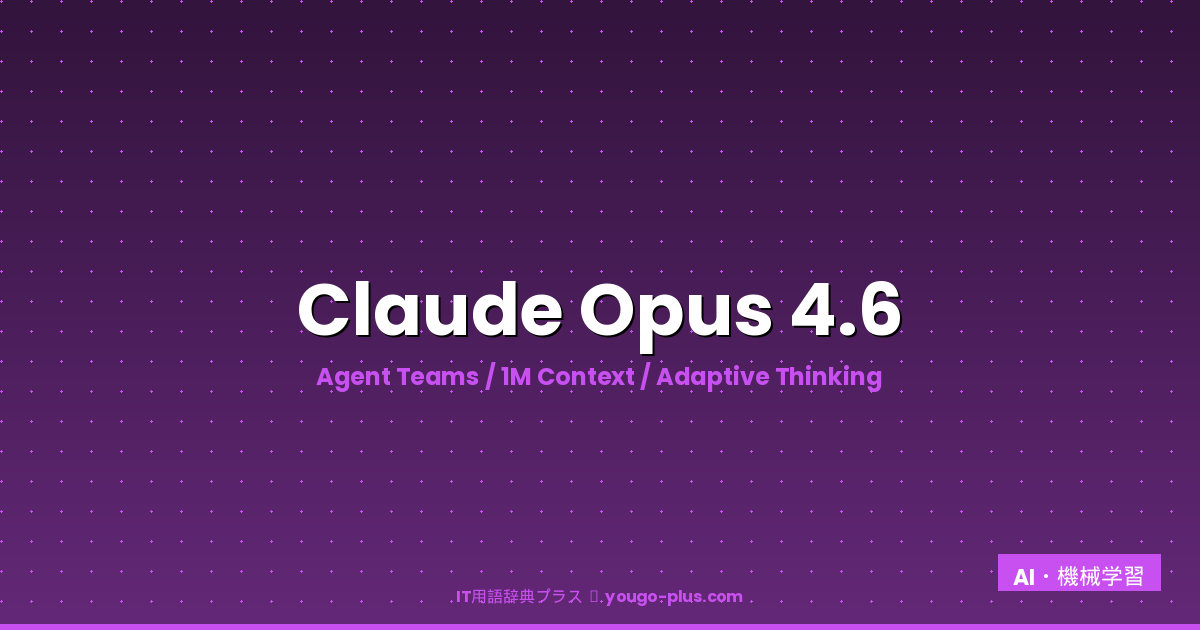
What Is Claude Opus 4.6?
Claude Opus 4.6 is the flagship large language model (LLM) released by Anthropic on February 5, 2026. As the most capable model in the Claude family at its time of release, Opus 4.6 introduced several groundbreaking capabilities that significantly raised the bar for what developers and enterprises can accomplish with a single AI model. With a 1 million token context window and support for up to 128,000 output tokens, Claude Opus 4.6 was purpose-built for large-scale agentic workflows, complex code generation, and deep document analysis. You should note that this represents a major leap forward in the practical usability of LLMs for enterprise engineering tasks.
The most transformative feature introduced in Claude Opus 4.6 is “Agent Teams” — a novel architecture enabling multiple AI agents to work on different parts of a problem simultaneously. These agents communicate through a standardized communication layer called the “Mailbox Protocol,” allowing for coordinated parallel processing of complex tasks. This is important because it moves LLMs from being single-threaded assistants to orchestrators of multi-agent workflows. Prior to Opus 4.6, achieving this kind of coordination required custom middleware and prompt chaining; now it is built directly into the model’s capabilities.
In terms of raw performance, Claude Opus 4.6 demonstrated remarkable improvements across key benchmarks. Long-context retrieval accuracy jumped from 18.5% to 76%, it tops Terminal-Bench 2.0 for agentic coding evaluation, leads Humanity’s Last Exam (the most challenging general knowledge benchmark), and achieved a 53.4% score on SWE-bench Pro, which tests real-world software engineering tasks. On the GDPval-AA benchmark, Opus 4.6 outperforms GPT-5.2 by approximately 144 Elo points. These results are particularly significant for engineering teams evaluating which model to integrate into their CI/CD pipelines and developer tooling.
Claude Opus 4.6 is available through multiple access points: the consumer-facing claude.ai web application, the Claude API for programmatic access, AWS Bedrock for AWS-native integrations, Google Cloud Vertex AI, and Microsoft Foundry on Azure. Pricing is set at $5 per million input tokens and $25 per million output tokens. Keep in mind that while Opus 4.6 has since been succeeded by Opus 4.7 (released April 2026), it remains a highly capable model that continues to power production systems worldwide.
How to Pronounce Claude Opus 4.6
IPA: /klɔːd ˈoʊpəs fɔːr pɔɪnt sɪks/ / Phonetic: KLAWD OH-puhs FOR point SIKS
“Claude” derives from the French name and is pronounced “KLAWD” (rhymes with “awed” with a leading “kl”). “Opus” comes from Latin meaning “a work” or “composition” and is pronounced “OH-puhs” with the stress on the first syllable. “4.6” is simply “four point six.” The full name is typically said as three distinct parts: “Claude” (pause) “Opus” (pause) “four point six.”
How Claude Opus 4.6 Works
Understanding the internal architecture of Claude Opus 4.6 is important for engineers who want to maximize its capabilities. The model introduces several novel technical mechanisms that differentiate it from previous generations and competing models. Let us examine each core component in detail.
Agent Teams and the Mailbox Protocol
Agent Teams is arguably the most significant architectural innovation in Claude Opus 4.6. Rather than processing a complex request as a single monolithic task, the model can spawn multiple specialized agents that work concurrently on different aspects of the problem. These agents coordinate through the Mailbox Protocol, a structured message-passing system that allows agents to share intermediate results, request information from each other, and synchronize their outputs before delivering a unified response.
User Request
Complex multi-part task
Orchestrator
Decomposes & distributes tasks
Agent Teams
Parallel execution via Mailbox Protocol
Agent A
Code generation
Agent B
Test generation
Agent C
Documentation
Mailbox Protocol
Inter-agent communication
The practical implication for developers is significant. When you send a complex request — for example, “refactor this module, write tests, and update the documentation” — Agent Teams can handle each sub-task in parallel rather than sequentially. This results in faster turnaround times and more coherent outputs because each agent has access to shared context through the Mailbox Protocol. Note that this parallel processing happens transparently; you do not need to manually orchestrate agents through the API.
Adaptive Thinking
Adaptive Thinking is Claude Opus 4.6’s mechanism for dynamically allocating reasoning resources based on problem complexity. Instead of applying uniform computational effort across all parts of a response, the model identifies which components require deeper analysis and concentrates its reasoning capacity there. For straightforward factual questions, the model responds quickly with minimal overhead. For complex logical reasoning, mathematical proofs, or nuanced code analysis, it automatically engages deeper processing chains.
This is important for cost optimization in production deployments. Because Adaptive Thinking avoids spending unnecessary compute on simple sub-tasks, the effective cost per useful output token is lower than what the raw pricing suggests. Engineers building applications on top of Opus 4.6 should design their prompts to clearly delineate which parts of a request require deep reasoning and which are straightforward, allowing Adaptive Thinking to optimize resource allocation effectively.
1 Million Token Context Window
The 1 million token context window in Claude Opus 4.6 represents a fourfold increase over previous-generation models. More importantly, the quality of retrieval within that window has improved dramatically — from 18.5% accuracy to 76%. This means that when you load a large codebase, a lengthy legal document, or an entire research corpus into the context, the model can actually find and utilize relevant information throughout that context with far greater reliability than before.
The 128,000 token maximum output further enhances the model’s practical utility. Engineers can now request complete implementations, detailed analysis reports, or comprehensive documentation in a single API call without hitting output limits. You should keep in mind that while these limits are generous, structuring your prompts to guide the model’s attention to the most relevant parts of the context will still yield better results than simply dumping everything in without guidance.
Constitutional AI and Safety Framework
Claude Opus 4.6 continues to build on Anthropic’s Constitutional AI (CAI) framework, which guides the model’s behavior through a set of principles rather than purely through reinforcement learning from human feedback. This approach means the model can articulate its reasoning about why it does or does not comply with certain requests, providing greater transparency for enterprises that need to understand and audit AI decision-making processes. For teams building customer-facing applications, this is an important consideration for regulatory compliance and trust.
How to Use Claude Opus 4.6: Practical Examples
Claude Opus 4.6 can be accessed through multiple platforms: claude.ai for interactive use, the Claude API for programmatic integration, AWS Bedrock for AWS-native workflows, Google Cloud Vertex AI, and Microsoft Foundry on Azure. Below are practical code examples demonstrating common integration patterns that engineering teams will find useful in production environments.
Basic API Call with the Anthropic Python SDK
import anthropic

client = anthropic.Anthropic(api_key="your-api-key")

message = client.messages.create(
    model="claude-opus-4-6-20260205",
    max_tokens=4096,
    messages=[
        {
            "role": "user",
            "content": "Analyze the time complexity of the following algorithm and suggest optimizations."
        }
    ]
)

print(message.content[0].text)
Leveraging Agent Teams for Parallel Task Processing
While Agent Teams operate internally within the model, you can structure your prompts to maximize the benefit of parallel processing. The key is to clearly define distinct sub-tasks within your request.
import anthropic

client = anthropic.Anthropic(api_key="your-api-key")

# Structure the prompt to enable Agent Teams parallel processing
prompt = (
    "Please complete these three independent tasks:\n\n"
    "TASK 1 - CODE: Implement a thread-safe LRU cache in Python "
    "with O(1) get/put operations.\n\n"
    "TASK 2 - TESTS: Write comprehensive pytest tests for an LRU cache "
    "implementation, covering edge cases like capacity=0, concurrent "
    "access, and eviction ordering.\n\n"
    "TASK 3 - DOCS: Write API documentation for an LRU cache class "
    "including constructor parameters, method signatures, usage examples, "
    "and thread-safety guarantees."
)

message = client.messages.create(
    model="claude-opus-4-6-20260205",
    max_tokens=16384,
    system="You are a senior software engineer. Process each task independently.",
    messages=[
        {"role": "user", "content": prompt}
    ]
)

print(message.content[0].text)
Large Context Processing for Codebase Analysis
import anthropic
from pathlib import Path

client = anthropic.Anthropic(api_key="your-api-key")

# Load an entire project directory into context
def load_codebase(directory, extensions=(".py", ".js", ".ts")):
    files_content = []
    for path in sorted(Path(directory).rglob("*")):
        if path.suffix in extensions and path.is_file():
            try:
                content = path.read_text(encoding="utf-8")
                rel = path.relative_to(directory)
                files_content.append(f"### File: {rel}\n{content}")
            except (UnicodeDecodeError, PermissionError):
                continue
    return "\n\n".join(files_content)

codebase = load_codebase("./my-project")

message = client.messages.create(
    model="claude-opus-4-6-20260205",
    max_tokens=32768,
    messages=[
        {
            "role": "user",
            "content": (
                "Analyze this codebase for:\n"
                "1. Security vulnerabilities (SQL injection, XSS, SSRF)\n"
                "2. Performance bottlenecks\n"
                "3. Dead code that can be safely removed\n"
                "4. Missing error handling\n\n"
                "Codebase:\n" + codebase
            )
        }
    ]
)

print(message.content[0].text)
Streaming Responses for Real-Time Applications
import anthropic

client = anthropic.Anthropic(api_key="your-api-key")

# Stream responses for better UX in interactive applications
with client.messages.stream(
    model="claude-opus-4-6-20260205",
    max_tokens=8192,
    messages=[
        {
            "role": "user",
            "content": "Design a microservices architecture for a high-traffic e-commerce platform."
        }
    ]
) as stream:
    for text in stream.text_stream:
        print(text, end="", flush=True)
AWS Bedrock Integration
import boto3
import json

# Using Claude Opus 4.6 via AWS Bedrock
bedrock = boto3.client(
    service_name="bedrock-runtime",
    region_name="us-east-1"
)

body = json.dumps({
    "anthropic_version": "bedrock-2023-05-31",
    "max_tokens": 4096,
    "messages": [
        {
            "role": "user",
            "content": "Explain the CAP theorem and its implications for distributed systems."
        }
    ]
})

response = bedrock.invoke_model(
    body=body,
    modelId="anthropic.claude-opus-4-6-20260205-v1:0",
    accept="application/json",
    contentType="application/json"
)

result = json.loads(response["body"].read())
print(result["content"][0]["text"])
Advantages and Disadvantages of Claude Opus 4.6
Advantages
- Agent Teams for parallel processing: The ability to decompose complex tasks into parallel sub-tasks through the Mailbox Protocol is a genuine architectural advantage. Engineering teams report 2-3x faster turnaround on multi-part requests compared to sequential processing with other models. This is important for CI/CD pipeline integrations where latency matters.
- 1 million token context window with 76% retrieval accuracy: The combination of massive context and dramatically improved retrieval (up from 18.5%) means you can analyze entire codebases, lengthy contracts, or research paper collections in a single pass. This eliminates the need for complex chunking and retrieval-augmented generation (RAG) pipelines in many use cases.
- Adaptive Thinking for cost efficiency: By concentrating reasoning resources on the genuinely hard parts of a problem, Opus 4.6 avoids wasting compute on trivial sub-tasks. In practice, this translates to better cost-per-quality ratios than models that apply uniform reasoning depth across all tasks.
- State-of-the-art benchmark performance: Leading Terminal-Bench 2.0, Humanity’s Last Exam, and outperforming GPT-5.2 on GDPval-AA by 144 Elo points provides objective evidence of capability. The 53.4% on SWE-bench Pro is particularly relevant for engineering teams, as this benchmark tests real-world software development tasks.
- Multi-platform availability: Support across Claude API, AWS Bedrock, Google Cloud Vertex AI, and Microsoft Foundry on Azure means teams can integrate Opus 4.6 into their existing cloud infrastructure without vendor lock-in.
Disadvantages
- Higher cost for high-volume applications: At $5/$25 per million tokens (input/output), costs can accumulate quickly for applications that process millions of requests daily. Teams should implement caching, prompt optimization, and request batching strategies to control expenses.
- Learning curve for Agent Teams optimization: While Agent Teams work transparently, getting the best results requires understanding how to structure prompts for effective task decomposition. Poorly structured prompts may not fully leverage the parallel processing capabilities.
- Latency considerations for large contexts: Processing requests that utilize the full 1 million token context window inevitably takes longer than smaller requests. For latency-sensitive applications, you should carefully balance context size against response time requirements.
- Already succeeded by Opus 4.7: With Claude Opus 4.7 released in April 2026, Opus 4.6 is no longer the latest model. Teams starting new projects should evaluate whether Opus 4.7 better suits their needs, though Opus 4.6 remains fully supported and highly capable.
Difference Between Claude Opus 4.6 vs GPT-5
Claude Opus 4.6 and OpenAI’s GPT-5 series models are the two dominant LLMs that engineering teams evaluate for enterprise AI integration. Understanding their differences is critical for making informed architectural decisions. The following comparison table and analysis draw on publicly available benchmark data and pricing information.
| Comparison Criteria | Claude Opus 4.6 | GPT-5.2 |
|---|---|---|
| Developer | Anthropic | OpenAI |
| Release Date | February 5, 2026 | Late 2025 |
| Context Window | 1,000,000 tokens | ~250,000 tokens |
| Max Output Tokens | 128,000 tokens | ~32,000 tokens |
| GDPval-AA | ~144 Elo points higher | Baseline |
| Agent Teams | Yes (Mailbox Protocol) | No native equivalent |
| Adaptive Thinking | Yes | Custom reasoning pipeline |
| SWE-bench Pro | 53.4% | ~45% |
| Input Pricing | $5 / million tokens | $10 / million tokens |
| Output Pricing | $25 / million tokens | $30 / million tokens |
| Safety Framework | Constitutional AI | RLHF + Safety Tuning |
| Long-Context Retrieval | 76% | ~60% |
| Agentic Coding (Terminal-Bench 2.0) | #1 | #3 |
The most significant differences for engineering teams are threefold. First, Claude Opus 4.6’s context window is approximately four times larger than GPT-5.2’s, and its long-context retrieval accuracy is substantially higher. This matters enormously for use cases involving large codebases, lengthy documents, or complex multi-file analysis. Second, the Agent Teams capability with Mailbox Protocol gives Opus 4.6 a structural advantage for complex, multi-part tasks that benefit from parallel decomposition. Third, the pricing advantage is notable — Opus 4.6 is roughly half the cost per token while delivering superior benchmark performance on most evaluations.
However, it is important to recognize that GPT-5.2 excels in certain areas, particularly in its ecosystem integration with Microsoft’s suite of tools and its multimodal capabilities. Teams heavily invested in the OpenAI ecosystem may find the migration cost to Claude outweighs the performance benefits. The right choice depends on your specific use case, existing infrastructure, and performance requirements.
Common Misconceptions About Claude Opus 4.6
Misconception 1: Claude Opus 4.6 Is the Best at Everything
While Opus 4.6 leads on many prestigious benchmarks, no single model dominates every possible task category. For specialized tasks like real-time image generation, certain multimodal reasoning scenarios, or tasks requiring specific domain fine-tuning, other models or specialized systems may perform better. You should evaluate model performance on your specific use case rather than relying solely on aggregate benchmark scores. The model’s strengths are most pronounced in agentic coding, long-context reasoning, and complex multi-step problem solving.
Misconception 2: Agent Teams Means Autonomous AI That Makes Its Own Decisions
Agent Teams is a task decomposition and parallel processing mechanism, not an autonomous decision-making system. The agents operate strictly within the bounds of the user’s prompt and the model’s safety constraints. They do not independently decide what problems to solve or take unsupervised actions. Think of Agent Teams as a sophisticated work distribution system rather than a team of independent AI entities. Human oversight remains essential, and this is by design — Anthropic’s Constitutional AI framework ensures that the model maintains alignment with user intent.
Misconception 3: 1 Million Tokens of Context Means Perfect Understanding of 1 Million Tokens
The 76% long-context retrieval accuracy, while a massive improvement over the previous 18.5%, still means approximately one in four retrieval attempts within the full context may miss relevant information. For mission-critical applications, you should not assume that placing information anywhere in a 1 million token context guarantees the model will find and use it. Best practices include placing the most critical information at the beginning or end of the context, using clear section headers, and structuring documents hierarchically. Note that retrieval accuracy improves with shorter context lengths, so using only as much context as necessary is still important.
Misconception 4: The API Pricing Makes It Cheap for Any Scale
At $5/$25 per million tokens, Claude Opus 4.6 offers competitive pricing compared to GPT-5.2. However, for high-volume applications processing millions of requests per day, costs can still be substantial. A single 100K-token input with a 10K-token output costs approximately $0.75. At scale, this adds up quickly. Engineering teams should implement proper cost monitoring, response caching, prompt optimization, and consider whether lighter models (like Claude Sonnet) can handle simpler requests to reduce overall spend.
Real-World Use Cases for Claude Opus 4.6
Enterprise Codebase Refactoring and Migration
One of the most impactful use cases for Claude Opus 4.6 is large-scale codebase refactoring. With the 1 million token context window, engineering teams can load entire modules or even complete microservices into a single prompt, enabling the model to understand cross-file dependencies, shared interfaces, and architectural patterns before generating refactoring suggestions. Agent Teams can parallelize this work: one agent analyzes the existing code structure, another generates the refactored code, and a third produces updated tests. Teams migrating from Python 2 to Python 3, from REST to GraphQL, or from monolithic to microservice architectures have found this particularly valuable.
Automated Security Auditing
Security teams use Claude Opus 4.6 to perform comprehensive code audits that go beyond what traditional static analysis tools can detect. The model’s ability to understand business logic, trace data flows across multiple files, and reason about complex attack vectors makes it effective at identifying vulnerabilities like logic flaws, race conditions, and subtle authorization bypass issues. The 53.4% SWE-bench Pro score demonstrates its practical understanding of real-world codebases, making it a powerful supplement to existing AppSec tooling.
Technical Documentation Generation
Claude Opus 4.6 excels at generating and maintaining technical documentation. By loading an entire codebase into context, the model can produce API reference documentation, architecture decision records, onboarding guides, and runbooks that are actually consistent with the current state of the code. This is a practical improvement over documentation tools that rely on code comments alone, as Opus 4.6 can infer intent, explain design decisions, and provide usage examples based on its understanding of the code’s behavior.
Data Analysis and Research Synthesis
Research teams leverage the large context window to load dozens of academic papers, internal reports, or market research documents and request synthesized analysis, comparative summaries, or gap identification. Adaptive Thinking ensures that the model dedicates deeper reasoning to the genuinely complex analytical questions while efficiently handling straightforward summarization tasks. This makes it particularly useful for literature reviews, competitive intelligence reports, and due diligence research.
CI/CD Pipeline Integration
Engineering teams integrate Claude Opus 4.6 into their continuous integration pipelines for automated code review, PR summarization, and change impact analysis. The model reviews pull requests, identifies potential bugs, suggests improvements, and generates human-readable summaries of what changed and why. The Agent Teams feature is particularly useful here, as different agents can simultaneously analyze code quality, test coverage, performance implications, and security considerations for each PR. This is an important workflow optimization that reduces the review burden on senior engineers.
Frequently Asked Questions (FAQ)
Q1: How much does Claude Opus 4.6 cost to use?
Claude Opus 4.6 is priced at $5 per million input tokens and $25 per million output tokens through the Claude API. For reference, 1 million tokens is approximately 750,000 words of English text. If you are using claude.ai with a Pro or Team subscription, Opus 4.6 is included in your monthly plan with usage limits. AWS Bedrock, Google Cloud Vertex AI, and Microsoft Foundry on Azure may have slightly different pricing structures due to platform fees. For cost optimization, consider implementing prompt caching, using shorter prompts where possible, and routing simpler tasks to less expensive models like Claude Sonnet.
Q2: Where can I access Claude Opus 4.6?
Claude Opus 4.6 is available through five primary channels: (1) claude.ai for direct interactive use, (2) the Anthropic Claude API for programmatic access, (3) AWS Bedrock for AWS-integrated deployments, (4) Google Cloud Vertex AI for GCP-native workflows, and (5) Microsoft Foundry on Azure. The API model identifier is “claude-opus-4-6-20260205”. Each platform provides its own SDK and authentication mechanisms, so choose the one that best fits your existing infrastructure and cloud provider commitments.
Q3: Should I use Claude Opus 4.6 or upgrade to Opus 4.7?
Claude Opus 4.7, released in April 2026, offers incremental improvements over Opus 4.6. If you are starting a new project and have no existing dependency on Opus 4.6, evaluating Opus 4.7 makes sense. However, if you have production systems running on Opus 4.6, there is no urgent need to migrate. Opus 4.6 remains a fully supported, highly capable model. When considering migration, you should test your specific workloads on Opus 4.7 to confirm that the behavioral changes align with your application’s requirements, as model upgrades can sometimes change response patterns in subtle ways.
Q4: Do I need special API endpoints for Agent Teams?
No. Agent Teams is an internal capability of the Claude Opus 4.6 model and does not require separate API endpoints, additional configuration, or extra fees. When you send a prompt that involves multiple distinct sub-tasks, the model automatically activates Agent Teams to process them in parallel. To get the best results, structure your prompts with clearly delineated, independent sub-tasks. The model will determine the optimal decomposition strategy based on your prompt structure.
Q5: How does Claude Opus 4.6 handle sensitive data and privacy?
Anthropic’s data handling policies apply to all Claude models, including Opus 4.6. When using the API, your prompts and completions are not used to train models by default. For enterprises with strict data residency requirements, AWS Bedrock and Google Cloud Vertex AI deployments allow you to keep data within specific geographic regions. You should review Anthropic’s current data processing agreement and your chosen platform’s compliance certifications (SOC 2, HIPAA, GDPR) to ensure alignment with your organization’s security requirements.
Summary
Claude Opus 4.6 represents a significant milestone in the evolution of large language models, introducing architectural innovations that move AI from single-task assistants to parallel-processing orchestration platforms. Released by Anthropic on February 5, 2026, it combines a 1 million token context window (with 76% retrieval accuracy), Agent Teams with Mailbox Protocol for parallel task decomposition, Adaptive Thinking for intelligent compute allocation, and state-of-the-art benchmark performance across coding, reasoning, and general knowledge evaluations.
For engineering teams, the key takeaways are: (1) Agent Teams enables genuinely parallel processing of complex multi-part tasks, reducing turnaround time and improving output coherence; (2) the massive context window with improved retrieval eliminates the need for complex RAG pipelines in many use cases; (3) the pricing at $5/$25 per million tokens offers competitive value relative to GPT-5.2; and (4) multi-platform availability means you can integrate it into your existing cloud infrastructure without significant architectural changes.
While Opus 4.6 has been succeeded by Opus 4.7 (April 2026), it remains a powerful and fully supported model that continues to power production systems worldwide. Whether you are building developer tools, automating code review, generating documentation, or performing security audits, Claude Opus 4.6 provides the capability, context capacity, and cost-efficiency that modern engineering workflows demand.


Leave a Reply